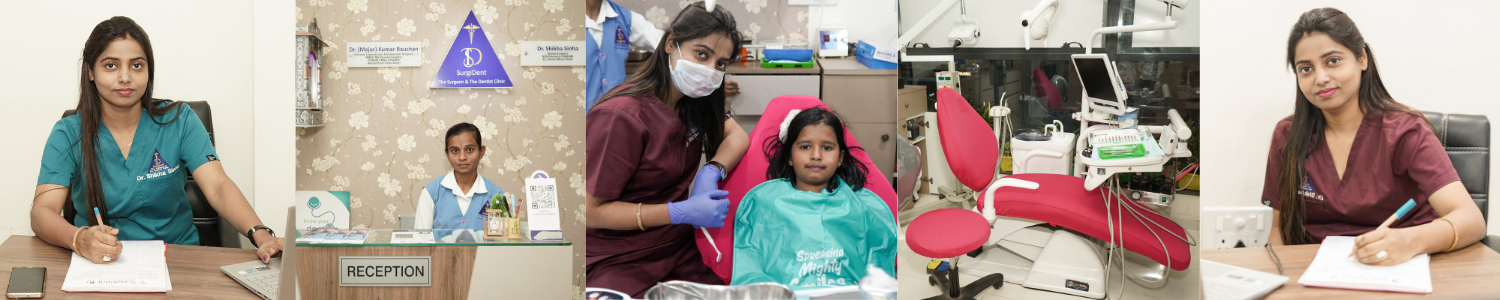
1. Dental Examination
The dentist examines your teeth, gums and oral tissues and discusses your symptoms or treatment concerns.
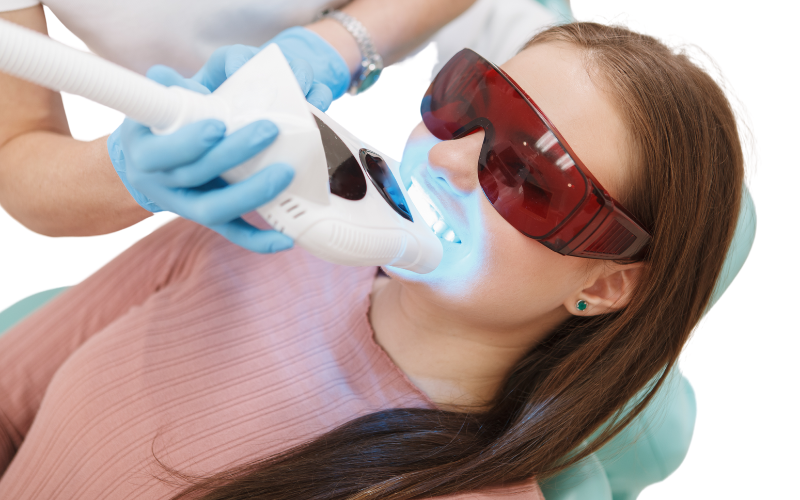
Laser dentistry uses focused light energy for selected dental procedures involving the gums, soft tissues and other oral conditions. Depending on the treatment, dental lasers may help provide controlled tissue treatment and may reduce bleeding or the need for conventional instruments in some procedures.
At Surgident Dental Clinic, Laser Dentistry in Punawale is considered according to your dental condition, treatment requirements and overall oral health. Dr. Shikha Sinha examines the affected area before recommending whether laser treatment is suitable for you.
Laser dentistry is a dental treatment approach that uses concentrated light energy for specific procedures. Different types of dental lasers can be used for different purposes, including selected gum treatments and soft-tissue procedures.
Laser treatment is not suitable for every dental problem. Your dentist will assess your condition and explain whether Laser Dental Treatment in Punawale is an appropriate option.
Laser dentistry may be considered for selected dental and soft-tissue conditions, including:
The recommended treatment depends on the location and severity of the dental problem.
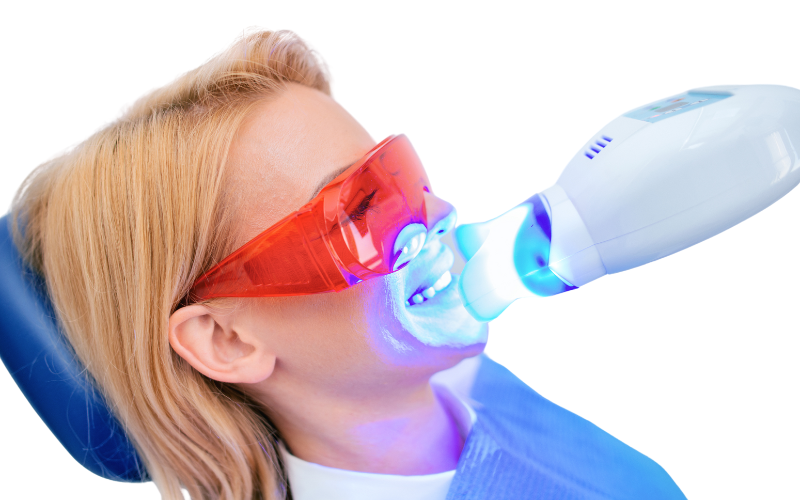
The procedure varies depending on the dental condition being treated.
The dentist examines your teeth, gums and oral tissues and discusses your symptoms or treatment concerns.
Your dental condition is assessed to determine whether laser treatment is suitable. Other treatment options may also be discussed when appropriate.
The treatment area is prepared before the laser procedure. Local anaesthesia may be used when required, depending on the procedure and individual patient needs.
The dental laser is carefully directed at the treatment area. The settings and technique depend on the specific procedure being performed.
After treatment, you receive instructions about oral hygiene, food choices, medication if prescribed and other steps that may support healing.
Laser technology can be used for several selected dental procedures.
Dental lasers may be used as part of treatment for certain gum conditions. The appropriate approach depends on the type and severity of gum disease.
In selected cases, dental lasers may be used as part of treatment for tooth sensitivity. The underlying cause of sensitivity should first be identified by a dentist.
Laser technology may be used for certain gum-contouring procedures where excess gum tissue affects the appearance of the smile.
Lasers can be used for selected soft-tissue procedures involving the gums and other oral tissues.
A frenectomy involves modifying or removing a portion of a tissue attachment called a frenum. Laser technology may be considered for suitable frenectomy cases after clinical assessment.
Depending on the procedure, laser dentistry may offer certain advantages.
The benefits vary according to the procedure, dental condition and individual patient.
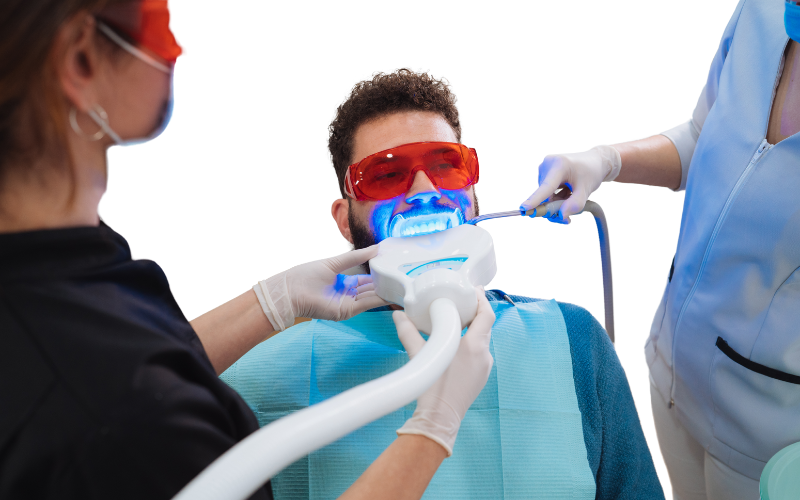
The level of discomfort depends on the type of laser procedure being performed and the area being treated.
Some procedures may require little or no local anaesthesia, while others may require anaesthesia for patient comfort. You may experience mild sensitivity or discomfort after treatment depending on the procedure.
Your dentist will explain what you can expect before starting treatment.
Laser dentistry is not automatically better for every dental condition. Traditional dental techniques remain appropriate for many treatments.
Laser technology can be useful for selected procedures where its characteristics provide a clinical advantage. The right treatment depends on your diagnosis, oral health, treatment goals and the dentist's assessment.
Both laser and conventional techniques have their own applications.
| Laser Dentistry | Traditional Techniques |
|---|---|
| Uses focused laser energy for selected procedures | Uses conventional dental instruments |
| Particularly useful for certain gum and soft-tissue treatments | Suitable for a wide range of dental procedures |
| May reduce bleeding in some soft-tissue procedures | Technique varies according to the treatment |
| Can provide controlled tissue treatment | Well-established approach for many dental conditions |
| Not suitable for every dental procedure | Remains necessary for many treatments |
Your dentist can recommend the most suitable technique after examining your dental condition.
Laser dentistry can be used safely when the appropriate equipment, settings and clinical techniques are used by a trained dental professional.
However, the safety and suitability of treatment depend on the specific procedure and individual patient. A dental examination is important before deciding whether laser treatment is appropriate.
Aftercare depends on the type of laser procedure performed.
Continue maintaining good oral hygiene while following any specific instructions given by your dentist.
Depending on the procedure, softer foods may be recommended for a short period to avoid irritating the treated area.
Avoid unnecessary touching or disturbing the treatment area while it heals.
If medication is prescribed, follow the dosage and duration recommended by your dentist.
A follow-up appointment may be recommended depending on the procedure and your recovery.
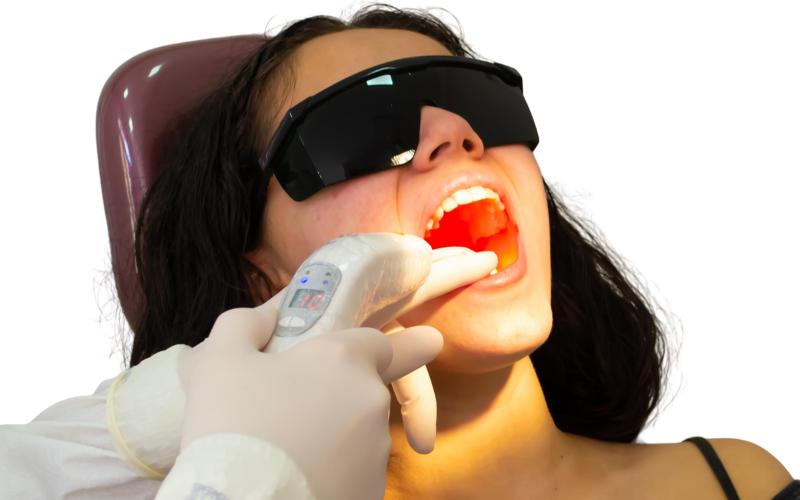
Treatment time varies significantly depending on the procedure being performed.
A simple soft-tissue procedure may take less time than a more involved gum treatment. During your consultation, the dentist can explain the expected treatment duration based on your specific dental needs.
Every treatment begins with an examination of your dental condition and oral health.
Laser treatment is recommended only when it is suitable for the particular dental concern.
The treatment approach is planned with attention to your comfort before, during and after the procedure.
Surgident Dental Clinic provides a range of dental treatments, allowing your overall dental needs to be assessed alongside laser treatment when required.
Laser technology has become a useful option for several dental procedures, particularly selected gum and soft-tissue treatments. However, it is not a replacement for every conventional dental procedure.
If you are considering Laser Dental Treatment in Punawale, a consultation can help determine whether laser dentistry is appropriate for your dental condition.
Laser dentistry can be used for selected gum, soft-tissue and other dental procedures. The exact applications depend on the type of laser and the treatment being performed.
Laser technology may be used as part of treatment for certain gum conditions. Your dentist will assess the severity and type of gum disease before recommending an appropriate treatment approach.
In selected cases, laser treatment may be considered for tooth sensitivity. However, the cause of sensitivity should first be identified because treatment depends on the underlying problem.
Not always. Some procedures may require little or no local anaesthesia, while others may require it. The need for anaesthesia depends on the procedure and individual patient.
No. Laser dentistry is not appropriate for every dental condition or every patient. A dental examination is necessary to determine whether it is suitable for your specific treatment needs.
Recovery depends on the type of procedure performed. Some treatments may involve minimal recovery, while others may require several days of care. Your dentist will provide procedure-specific aftercare instructions.
If you are searching for a Laser Dentist in Punawale, you can consult Dr. Shikha Sinha at Surgident Dental Clinic, located at Theia Business Park, Kate Wasti, Punawale, Pimpri- Chinchwad.
If you are considering laser treatment for your gums, soft tissues, tooth sensitivity or another dental concern, consult a dentist for an appropriate evaluation.
Surgident Dental Clinic Office No. 308, Theia Business Park, Kate Wasti, Punawale, Pimpri-Chinchwad, Maharashtra 411033
Phone: +91 87675 41406 Hours: Monday–Sunday, 10 AM–9 PM